
How We Operate
Mold Assessment FAQs
-
The person coming to your building is not just a technician or assessor - they are a fully-experienced Indoor Environmental Professional (IEP) trained in a vast array of indoor environmental topics and laboratory techniques. In addition, we have an open communication network always going where we send pictures and video chat with each other during assessments if we want an additional perspective. You literally have the experience of 20,000+ assessments and 65+ years completing your assessment. Our combined collegiate training and post-collegiate research and education is hard to rival. Combined, we have degrees in microbiology, immunology, chemistry, geology, biology with psychology emphasis, scientific writing, and field experience/training in building construction, moisture science, HVAC design and performance,
-
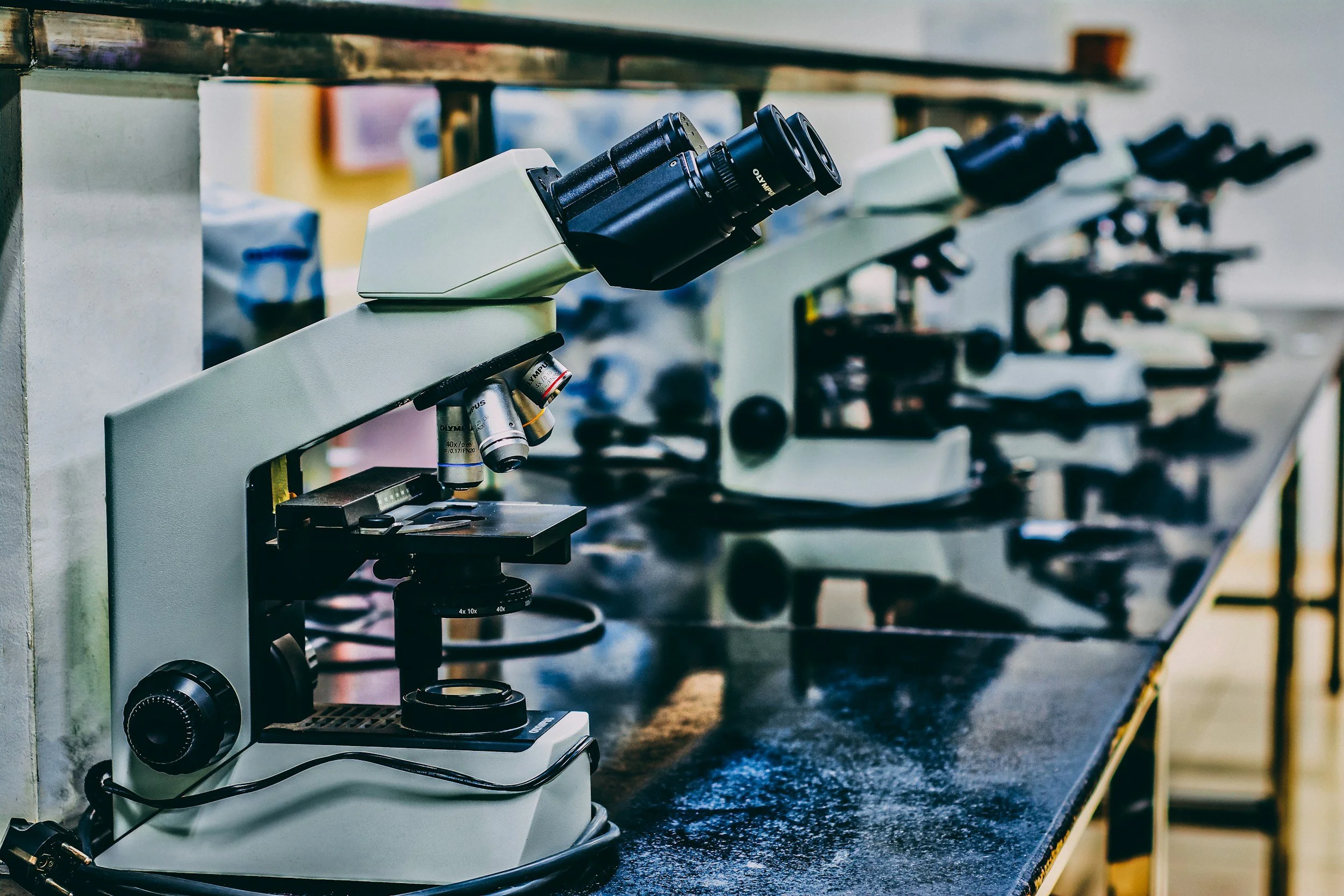
Faster than any other company possibly could - while we are still at your building. The reason is that we bring microscopes and other unique detection devices and lab equipment with us. When you hire us, you get both the consultant and the laboratory at the same time. We provide a review and discussion while present. A detailed written report with recommendation guidance is usually provided within a few days. We are available after for a reasonable amount of emails and phone calls.
-
Making well-written and detailed reports is essential for you to remember what was said during the assessment. Our report includes our observations from our multi-hour thorough assessment, detailed recommendations, sample results, and pictures. Sometimes we also make videos while walking through the space if the situation is complex and we want to be sure the contractor understands what needs to be completed.
-
We can collect any type of samples you want. However, usually we only need to use the microscope with our on-site analysis and unlimited number of air, dust, and surface samples to know where the mold grew and how far it spread through the structure. Occasionally we also collect samples that we then grow in our lab to identify lower concentrations of mold or to identify specific types of bacteria. For additional third-party laboratory fees we can also collect and interpret results for ERMI, mycotoxins, endotoxin, actinomycetes, and other types of testing. But, you very likely won’t need to spend the money on these tests if we find the sources of the organisms during our extensive and detailed physical assessment and microscope testing.
-
No. It would be a conflict of interest if we told you what needs to be done and then gave you a quote to do the work. We do know many qualified contractors to complete the work we specify and can give you names. We will also talk to any contractors or lay-persons who you have chosen to be sure everyone understands the work needed.
-
No. We will not provide medical advice as we are not healthcare practitioners. We can provide names of local healthcare practitioners that provide a range of medical philosophies whom our clients have had good experiences. We also deeply understand the science and various medical opinions of nationally-known practitioners such as Dr. Ritchie Shoemaker, Dr. Neil Nathan, and Dr. Andrew Campbell and others. We can almost always provide immediate clear answers to clarify the current state of understanding by these and other practitioners.
Smoke Assessment FAQs
-
Our smoke assessment primarily involves tracking where smoke (and extinguisher particles) moved through a building, which surfaces in the room have soot and char, and which cavity spaces were impacted. This is done real-time with a microscope for instant results! Gone are the days of guessing or waiting a week for a few results from a laboratory. We can collect and analyze hundreds of samples to give very precise remediation guidance in a day.
You may already know that smoke entered the room. But, did it stick to the ceiling? Did it enter into the cabinetry? Will the smoke particles be easy or hard to clean off the surface based on what types of particles were created? This is the level of details we provide with on-site microscope results.
-
The corrosiveness of smoke can vary greatly based on which materials burned and the temperature of the fire. Sometimes we can make assumptions when certain materials combusted - such as PVC. We can collect samples for third-party testing to determine the corrosivity of the smoke. In addition, the chemistry of the smoke changes as it moves from the source and we usually will need to collect samples from multiple locations.
-
Insurance companies frequently retain us for this service to provide objective, third-party recommendations. We don’t make any money on the restoration and have no inherent bias. We do provide concentrations of how much is “too much” soot or char on a surface based on a lot of field data. Usually, no one involved in the situation questions our findings. But, we are available to explain our process to anyone who is unfamiliar with our unique method of on-site microscopy.